
Hi vis rainwear can fail a buying program even when the sample looks bright and water beads on its surface. A buyer therefore needs separate evidence for water penetration, visibility, seam construction, wear life, and the hazards of the job. One attractive swatch or a supplier’s broad “waterproof” claim cannot settle all five questions.
This matters most when a private-label range has several sizes, color panels, and seasonal versions. A material change that saves a little per jacket can also alter background area, tape adhesion, breathability, or wash performance. The mistake often appears after the fabric has already been purchased and the cutting plan approved.
The six checks below turn material claims into reviewable decisions before bulk production. They apply to B2B sourcing of custom rain jackets, bibs, and related high-visibility workwear. The buyer must also assess the worksite hazard and the standard that applies in the destination market.
1. Is a Spray Rating Being Mistaken for Waterproofing in Hi Vis Rainwear?
The first material mistake is accepting a spray-test result as proof that a finished jacket will keep out sustained rain. A spray test measures how the outer surface sheds droplets. It does not measure the pressure needed to force water through a fabric, and neither test alone proves that a sewn garment will stay dry at the shoulders, zip, or pockets.
This distinction consequently affects purchase decisions. A durable water-repellent finish can also make a sample look convincing during a short demonstration, while the coating or membrane beneath it has a separate job. Conversely, a fabric may resist water penetration while its face wets out and feels heavy. Buyers should specify the use case first: intermittent drizzle, a full outdoor shift, kneeling in wet conditions, or work under running water.
1.1 Which Hi Vis Rainwear Tests Answer Different Questions?
The AATCC hydrostatic method specifically measures fabric resistance to water penetration under pressure. AATCC notes that its results may differ from rain or spray methods. Therefore, a quoted hydrostatic number should name the method, specimen, conditioning, and test report. A number without those details is difficult to compare across mills.
The AATCC spray method instead addresses surface repellency instead. It can help track the finish before and after care cycles, but it does not replace hydrostatic testing. Neither result gives a universal “hours in rain” guarantee because rain intensity, pressure from a harness, seam geometry, and wear also matter. For hi vis rainwear, ask for both the initial result and the result after the care schedule the brand intends to claim.
1.2 How Should a Buyer Write the Material Brief?
A useful brief therefore names the face fabric, coating or membrane, lining, finish, and intended exposure. It then assigns a test method and acceptance limit to each claim. Record fabric weight and hand feel as well; a lighter shell may suit a mobile crew, while a stiffer coated construction may suit a short-duration utility task.
| Approval item | Evidence to request | What it answers | What remains open |
|---|---|---|---|
| Surface finish | Spray-test report and care-cycle result | Does water bead on the face? | Pressure resistance and seam leakage |
| Shell barrier | Hydrostatic report with method and specimen code | Does the fabric resist penetration? | Finished-garment performance |
| Garment build | Seam map and tested sample revision | Are openings and joins controlled? | Wearer fit and task movement |
| Visibility | Material reports and size-specific layout | Is the target design documented? | Continued performance after care |
Finally, keep the swatch code, color, finish, and test report together. If a supplier substitutes a different finish or dye lot after approval, the earlier report may no longer represent the order. Buyers can review a waterproof jacket as one possible garment form, but the development brief must still define the material package for the actual program.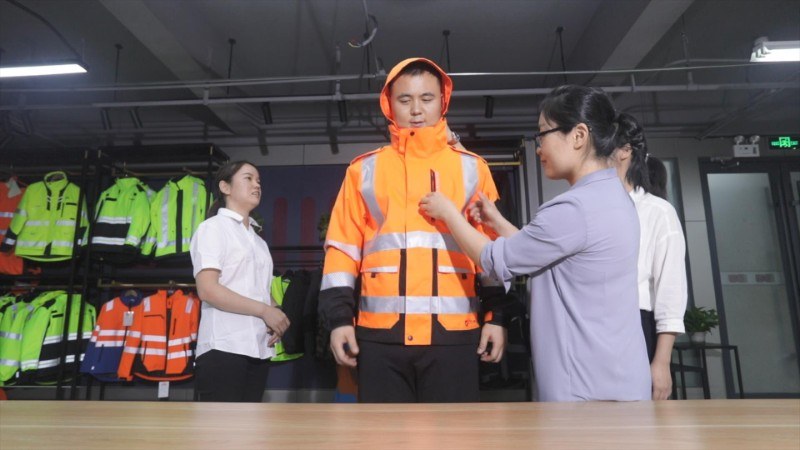
2. Does the Fabric Pass While the Finished Jacket Leaks?
The second mistake is treating the shell-fabric report as a finished-garment result. Sewing makes holes. Pockets, storm flaps, hood seams, cuffs, and reflective-tape attachments also add paths for water or create high-stress zones. A material may pass a laboratory hydrostatic test and still produce a jacket that leaks during wear.
First, define which seams need tape and how the tape must overlap at intersections. Then specify the tape that works with the chosen coating or membrane. Bond quality also depends on the material stack and processing conditions. A tape that adheres well to one laminate may peel from another after washing or flexing.
Next, examine design details in the position in which they will be used. A hood needs to turn with the wearer’s head without exposing the collar. A front closure also needs a water-management route. Pocket openings, radio access, and harness interfaces should not direct water through the shell. Thus, the sample review must include movement and a realistic rain exposure, not only a flat tabletop inspection.
The approval file should contain seam drawings, tape specifications, critical operation settings, and a record of where the finished garment was checked. BOWINS also uses computerized seam-taping equipment and QC hydrostatic checks within its waterproof-garment work. Those process controls are useful only when the buyer also defines the target construction and approves the actual sample.
If the program spans a jacket and bib, test the overlap as a system. Bending, reaching, and climbing can expose the waist even when both pieces pass separate fabric checks. A matching bib design illustrates the type of interface that needs a wear trial before bulk release.
3. Are Fluorescent Fabric and Reflective Tape Treated as Decoration?
The third mistake is selecting bright colors and reflective trim by appearance, then assuming the whole garment meets a visibility class. Visibility requirements concern the amount, placement, and performance of specified materials on the finished garment. A logo, dark reinforcement panel, pocket, or small size can change the available background area.
The ISO 20471 standard covers color, retroreflection, and minimum areas and placement for high-visibility clothing. ANSI/ISEA 107-2020 also sets design, performance, and labeling criteria for U.S. high-visibility safety apparel. The two systems should not be collapsed into one generic “hi-vis certified” claim. The destination market and workplace assessment determine the target.
3.1 Where Does the Hi Vis Rainwear Layout Lose Visible Area?
Reviewers should first check the smallest size. Its panels have the least space for reflective bands and fluorescent background. Then check the largest size, where a longer pocket or reinforcement panel may move a band away from its approved position. Hoods, removable liners, and detachable sleeves can create further variations that need their own layout review.
Work posture also matters. A harness, tool belt, or backpack can cover a band. A rain jacket worn over a compliant vest becomes the outer visible layer. Therefore, artwork and reflective maps should be reviewed on a dressed worker who reaches, bends, and turns, not only on a flat pattern. This is an engineering check, not a promise that a sample is certified.
3.2 Which Material Records Protect the Hi Vis Rainwear Claim?
Ask for color and retroreflection evidence for the exact material codes being purchased. Then link those codes to the bill of materials, pattern revision, finished-garment layout, and label text. Repeat the review after a fluorescent-color change, tape replacement, or major fit revision.
The reflective material also needs an agreed care claim. ANSI/ISEA 107-2020 addresses continued visibility through care procedures, so a fresh-material report alone cannot describe the garment’s useful life. A buyer should request the planned wash cycle, test evidence, and label instructions before approving the claim for hi vis rainwear.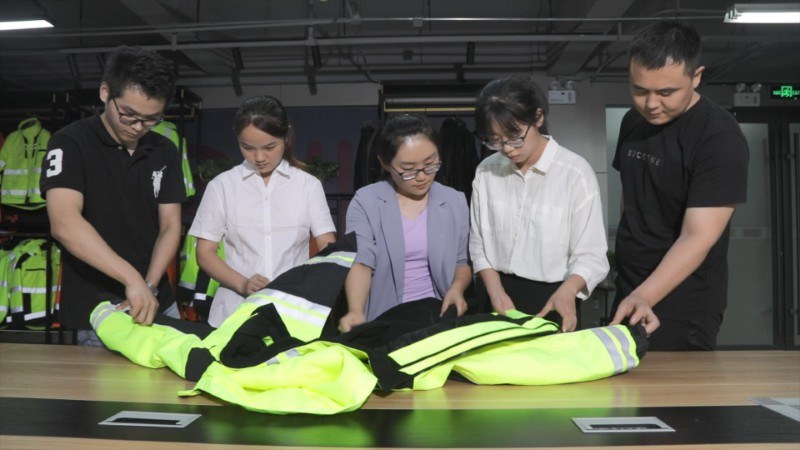
4. Is Laundering Left Out of the Material Decision?
The fourth mistake is approving a new fabric only in its unused state. Workwear is typically washed, folded, abraded, exposed to dirt, and sometimes treated in industrial laundry. Coatings can change hand feel or adhesion, reflective trim can lose performance, and fluorescent fabric can become stained or fade. A care label should describe an evaluated maintenance route, not a hopeful maximum wash count.
Start with the actual employer practice. Ask specifically whether garments are home washed, commercially laundered, or exposed to oils and heavy soil. Set the detergent, temperature, drying, and cycle count that the supplier must test. If the program expects reproofing, define who performs it and what happens to the visibility and waterproofing claim afterward.
Inspection criteria should be visual and measurable. The inspection should also look for seam-tape lifting, edge fray, reflective-band damage, color change, loss of surface beading, and water penetration at stressed areas. Keep the original sample and a washed comparison sample side by side. Record failure locations so the next revision changes the right component rather than the whole fabric without evidence.
A replacement policy must also be practical. A garment may nevertheless remain structurally intact while no longer delivering the specified visibility or water protection. The buyer should decide how workers report damage and who authorizes replacement. For hi vis rainwear, this is a fleet-management cost, not only a laboratory issue. A lower opening price can become expensive if the material package fails early in routine care.
5. Is Breathability Being Quoted Without the Whole Wear System?
The fifth material mistake is choosing a membrane or coating from one breathability figure without looking at effort, layers, weather, and garment openings. A worker climbing ladders makes more body heat than a worker directing traffic in cold rain. The same material can feel acceptable to one crew and clammy to another, even if both are technically protected from rain.
Moisture from the body can also be confused with external leakage. The review team should therefore check whether the inner surface is wet near the back and underarms after high exertion, or whether a seam leaks at a repeatable exterior point. The diagnosis affects whether the next sample needs a new material, a vent, a different lining, or better seam construction.
5.1 Which Hi Vis Rainwear Variables Change Wearer Comfort?
Compare materials using the same test method and conditioning. Figures from different methods are not automatically interchangeable. Also weigh air movement, face-fabric wetting, lining friction, and the thermal load of the full outfit. Adding a heavy insulated liner to a shell can overwhelm a small theoretical gain in fabric moisture transfer.
Pattern details matter as much as the laminate. A hood that blocks peripheral vision, a cuff that traps water, and a hem that rides up can make workers avoid the jacket. Because hi vis rainwear is often worn over tools or other PPE, the fit trial should include the actual layers and gear. Record both comfort and protection; one cannot excuse failure in the other.
5.2 What Should a Field Trial Record?
Give wearers a short task sheet rather than a vague “comfortable or not” question. Record weather, task duration, exertion level, underlayers, and the exact wet or hot area. The field team should then use the same sequence for each prototype: reach overhead, climb, crouch, handle tools, and enter a vehicle. Photograph any jacket rise, tape obstruction, or condensation point with the wearer’s consent.
Then compare the trial with laboratory reports. The aim is not to replace tests with opinion. It is to identify which construction performs for the intended crew. BOWINS can develop a custom shell from a buyer’s tech pack or help build the specification from a concept, with samples reviewed before a bulk order. That OEM/ODM route needs clear trial feedback to be effective.
6. Are Hazard Claims Being Combined Without Separate Evidence?
The sixth mistake is asking one “premium” material to stand for every job hazard. High visibility, rain protection, flame resistance, arc protection, and chemical splash are also different performance questions. A fabric may support more than one, but each claim requires the correct design, testing, labeling, and care evidence. A bright waterproof shell is not automatically suitable for electrical or fire risk.
ISO 13688 covers general protective-clothing requirements and explicitly works with standards for specific protection; it is not a standalone hazard approval. Likewise, a vertical-flame textile result alone cannot establish a complete garment’s performance for a specific fire or arc exposure. Product teams should keep each intended claim in a separate column of the approval matrix.
Before a buyer releases a combined-claim brief, the team should check:
- The task and hazard assessment, destination market, and applicable garment standard.
- The exact material, trim, closure, seam, and label evidence for each claim.
- Whether the claims remain valid after washing, repairs, size changes, and substitutions.
This single checklist also exposes conflicts. A reflective tape selected for visibility may not suit a required thermal exposure. A coating change may alter both water performance and care behavior. If test evidence is missing, hold that claim out of the product description until the full construction is reviewed. Honest limits protect the buyer, manufacturer, and wearer better than a broad “all-purpose PPE” phrase.
7. What Is the Final Verdict for a Sourcing Brief?
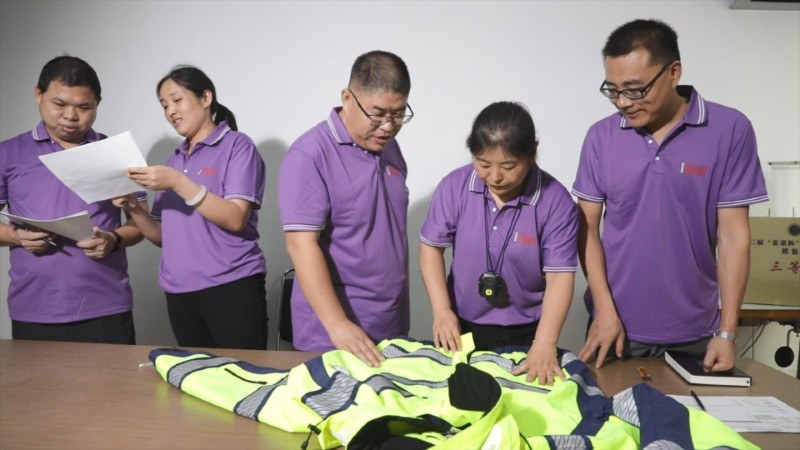
The best hi vis rainwear material decision is a traceable package, not a single fabric headline. Define the worker, weather, hazard, and care route. Then tie each claim to a material code, test method, sample revision, finished-garment check, and approval owner. This makes a supplier comparison meaningful even when quoted prices and technical language differ.
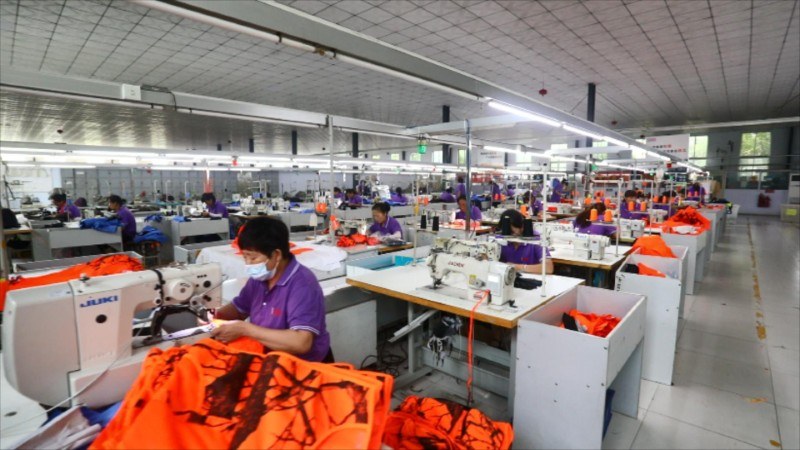
BOWINS Garment is our own OEM/ODM manufacturing operation, included here as a custom production partner rather than a retail or ready-stock seller. Our factory group has passed a Costco factory audit, and our workwear production uses controlled cutting, seam construction, and QC processes. These are useful risk controls, but the buyer should still approve the exact material package and sample for the program.
Send the planned use case, destination market, size range, target claims, care process, and current tech pack through our contact page. If the project is still a concept, send the key job tasks and existing failure reports. Those inputs let a development team propose a testable first sample rather than guessing at a universal rain jacket.
8. What Do Buyers Ask Before Approving Hi Vis Rainwear?
8.1 Can a waterproof fabric report approve the whole garment?
No. It describes the tested specimen under a named method. The finished garment adds seams, openings, trims, fit, and wear conditions. Ask for the fabric report, a documented construction, and a representative garment trial. If a supplier changes the face fabric, membrane, finish, or seam tape, review the evidence again before approving bulk.
8.2 Does reflective tape make every size compliant?
No. Material area, arrangement, color, retroreflection, and the finished design all matter. A small size may have too little background area after pockets and branding are added. Request layout drawings and relevant test documentation by size or size family. Then check the intended outer layer with the other equipment used at the worksite.


